- Part
- Part III: Minimalism in Practice · Chapter 18
Possessions
Fundamental Composition
When you embrace a minimalist lifestyle, one of the most tangible places it shows up is in your closet. Over time, I've experimented with reducing the number of clothing items I own to better understand what I actually wear and need. What I've discovered is that a smaller, more intentional wardrobe not only simplifies daily routines but also reduces decision fatigue, clutter, and waste. The following list reflects what I've found works well in my own closet ‒ a practical example of how minimalism can look in everyday life. It's not a rigid formula, but a framework that can help guide anyone seeking a simpler, more efficient wardrobe.
At a core level, here's what my minimalist wardrobe includes:
- 10 pairs of underwear.
- 10 pairs of socks. Ideally minimize the number of variations to make matching easier. Eg 1-3 colors/s or style differences. Lament when one style has been discontinued.
- 6-7 short sleeve shirts. Balanced material selection. 3-4 naturals like cotton or wool, 1-2 hybrids like lyocell/tencell etc, and 1-2 synthetics.
- 3 long sleeve shirts
- 1 down filled jacket
- 1 down filled vest.
- 4 pairs of shoes. 1 running, 1 dress leather boot. 1 slip on leather if possible 1 pair of sandals.
- 3-4 pairs of shorts
- 3-4 pairs of jeans
How many pieces of clothes do you actually need? This foundational wardrobe covers a variety of activities and climates while keeping my closet simple and easy to maintain. It's about owning less, but choosing items more thoughtfully ‒ each piece has a purpose and earns its place.
If the need arises to expand the clothes you harbor for work, do so sparingly. Only acquire the minimum the job requires. In the past I have made the mistake of over buying what wasn't actually necessary. I acquired too many dress shirts. Too many dress pants. Most of them I had purchased through local second hand stores or digitally on eBay. But the problem was after I changed jobs, the clothes remained. They ended up just consuming valuable space in my closet. I would look at the closet and feel overwhelmed. Overwhelmed with too many choices and unable to find what I needed quickly. It wasn't necessary to have that many clothes. Having multitudes of clothes are not an important part of elevating our careers. Having 1-2 good suits or 1-3 good shirts and pants is more than sufficient.
Once you have the core set of clothes you need, don't do anymore shopping for clothes or things.
Complexity Is Not the Enemy
You don't want to have a closet so filled with clothes to the point you're overwhelmed with choices. Deciding what to wear for the day should not be met with burdensome feelings of hesitation. Having a closet stuffed to the brink with way too many clothing items is overwhelming and unnecessary.
With clothes, the center of the closet is always the focus point. The edges are things you nearly forget. The more space between clothes and the more visible they are the less likely they are to be forgotten.
Talk about a time you couldn't find socks or underwear. The difficulty in finding the other sock to complete the pair. Has this ever happened to you? More is less. Owning more introduces extra complexity. Excess makes it harder to arrange and find things. It requires more time to be spent trying to figure out what to use or where something is.
Complexity Is Not the Enemy: Applying the Principle to Your Closet and Dresser
Complexity is not to be avoided ‒ it is to be understood and overcome. Nowhere is this truer than in the process of simplifying our physical spaces, starting with one of the most personal and frequently used areas: the closet and dresser.
At first glance, organizing your clothing can feel overwhelming. There are seasonal items, sentimental pieces, things that no longer fit but still carry a sense of obligation, and a tangle of choices tied to identity, aspiration, and habit. But minimalism doesn't ask us to avoid this complexity ‒ it challenges us to engage with it, patiently and honestly. The goal is not to rush through the process or avoid hard decisions, but to work through them thoughtfully.
Begin by understanding what you truly wear, need, and value. Learn the nuances: the difference between what is functional versus emotional, what is versatile versus redundant. Notice how certain items make you feel ‒ confident, comfortable, or maybe burdened. Understand why clutter accumulates: impulse buys, lifestyle changes, shifting self-images. By reflecting on these patterns, you develop the clarity to make better decisions going forward.
As you move through this process ‒ sorting, editing, refining ‒ you begin to see a structure emerge from the mess. Each drawer, hanger, and folded stack starts to reflect a version of yourself that is more intentional, more aware. What once felt tangled and chaotic becomes clear and purposeful.
Simplicity is not the starting point ‒ it is the result of confronting complexity with attention and courage. And the reward is not just a clean closet, but a calmer mind, a clearer morning routine, and a renewed sense of control over your environment. In this way, organizing your closet becomes more than a chore ‒ it becomes a micro-practice in transforming your life through minimalism.
This practice of simplifying to reduce decision fatigue is one embraced by some of the most influential minds. Steve Jobs famously wore the same black turtleneck and jeans every day ‒ not out of a lack of style, but to minimize the number of choices he had to make. By reducing trivial decisions, he conserved mental energy for more meaningful work. This philosophy, often mirrored by other leaders like Barack Obama and Mark Zuckerberg, illustrates that intentional simplicity can be a powerful tool for focus and efficiency.
When applied to our own lives, especially to something as routine as choosing clothes, this same principle can yield tremendous benefits. By curating a wardrobe filled only with pieces you truly need and love, you eliminate friction from your mornings, free up time and headspace, and create an environment that supports ‒ not distracts from ‒ your day. Simplifying your closet is not just about neatness; it's about aligning your physical space with your values, and recognizing that clarity on the outside often fosters clarity within.
In sight, in mind
Don't you hate that feeling when you don't know if you have something or not? Moreover, if you do have it, where it is? The more things you have, the more time you have to spend figuring out where things might be if you even still have them.
When you buy something try to start using it shortly after acquisition. Don't tuck it away. Remember the maxim, out of sight, out of mind. If it's packed away too quickly after acquisition somewhere, we won't be able to remember we even have it the next time we want to use it. It will swiftly drop out of our working memory.
A key strategy to prevent wasteful consumption is to incorporate new purchases into daily life as soon as possible. If an item gets packed away before it's ever used, it's more likely to be forgotten and eventually discarded without having served its purpose. Instead, shortly after acquisition, placing newly owned items in visible, accessible locations ensures they are integrated into our routines. This habit not only helps us maximize the value of our purchases but also reinforces the principle of buying only what we truly need ‒ rather than accumulating possessions that sit untouched and take up valuable space.
Trying to keep newly acquired items on the counter, table, cabinet or refrigerator ‒ visible places in general ‒ immediately after acquisition, before you decide to store them somewhere, will help prevent needless acquisitions. You'll start to build upon the mindset that purchases are for usage, not for storage. Let retailers deal with inventory depreciation with their accounting departments themselves.
A minimalist should free themselves of such concerns to further improve their finances and keep their storage cabinets free of clutter.
Weighted Storage
We have mountains and mountains of stuff. Garages filled with it. Boxes, closets, rooms, sheds, garages, and storage units. More stuff requires more space, which requires more energy to store. Consuming more of the free space within our homes. Pushing us to get even bigger spaces to store even more stuff. That requires us to use more energy to create and maintain our homes over time.
What's the point of having things stored in boxes that you forget exist? Before storing something we need to grapple with important reduction considerations:
- When might we actually use the item we intend to store?
- How much will the item depreciate in value between now and the time in the future we might use it again?
- How likely are we and those in our immediate circle to use this item again?
- Is it better in the current situation that I pass the item on to another, instead of storing it given the need for it now and the potential need for it in the future decreasing?
Asking important questions such as these will help you decide if the cost of storing the item is worth it. If you do need to store something away for some time these ideas might be helpful:
- Limit boxes to the same exact type of item.
- Try to get a see through container when thinking about storing multiple items in a box.
- Never store something in a place that you cannot easily reach it when needed.
- Use the calculations above before deciding to continue to possess something.
If you decide you need to rid yourself of a significant amount of possessions you might decide you need to do a garage or yard sale or donate. What makes a 'significant amount' is relative to you. Over the years as you consume minimally one item could be a large proportion of your holdings. The less you store, the less work it is to sell things. It makes it that much easier to shed excess possessions when you shift from one point in life to the next.
Everything is owned for a temporary period of time. Nothing is taken with us beyond this life. Therefore do not own things beyond the point when they are needed. Things belong most to those who value them the most.
Natural Goods: Dressing with Integrity
The modern wardrobe is built on contradiction. While fashion is a form of self-expression, many of the materials we wear tell a story of environmental degradation, fossil fuels, and waste. A minimalist and sustainable approach to clothing asks us to reimagine our garments ‒ not as disposable trends, but as durable, meaningful possessions that reflect care for both craft and the planet.
One powerful shift is toward natural fibers, especially those derived from regenerative and renewable sources. These fabrics not only reduce harm during production and disposal, but also elevate the quality, longevity, and performance of the clothing we choose to own.
Regenerative Wool: Fashion That Heals the Land
Can fashion actually contribute to restoring the Earth? According to Lucianne Tonti, author of Sundressed: Natural Fabrics and the Future of Clothing, regenerative wool offers a compelling answer. Sourced from farms that prioritize soil health, biodiversity, and animal welfare, regenerative wool goes beyond sustainability ‒ it helps rebuild ecosystems.
Wool is a technical marvel in its own right. It is:
Naturally odor-resistant and antibacterial
Flame-retardant and stain-resistant
Capable of absorbing up to 30% of its weight in moisture
Durable, elastic, and recyclable
Unlike petroleum-based synthetics like polyester, wool biodegrades, returning to the soil rather than polluting it. For those seeking clothing that aligns with nature rather than working against it, wool is an enduring ally.
Cellulose Fibers: From Forest to Fabric
Another family of fibers gaining attention in sustainable fashion is cellulose-based fabrics, which come from plant materials ‒ especially fast-growing, low-impact trees like eucalyptus, bamboo, and beechwood.
Tencel and Lyocell, for instance, are created through an environmentally responsible process that reuses solvents and water in a closed-loop system.
These fabrics are breathable, resilient, and biodegradable, offering the look and feel of synthetics without contributing to microplastic pollution.
They also blend well with cotton, wool, or silk, enhancing performance while reducing environmental impact.
These fibers are ideal for year-round wear thanks to their thermal regulation and moisture-wicking properties. Their versatility makes them a strong foundation for a minimalist wardrobe focused on quality over quantity.
Beyond Basics: Knowing Your Fibers
Understanding fabric composition is essential to making mindful choices. Below is a guide to commonly used fibers, with a focus on natural and regenerative options to prioritize:
Natural & Semi-Natural (Preferred for Sustainability)
Wool -- Warm, breathable, and biodegradable; ideal for cold weather garments.
Alpaca -- Softer and warmer than wool; requires fewer chemicals to process.
Mohair -- Luxurious and resilient; sourced from Angora goats.
Silk -- Strong and lustrous; biodegradable, though not always ethically produced.
Cotton -- Natural and breathable; opt for organic or rain-fed cotton when possible. Percale cotton for sheets is incredibly soft.
Hemp -- Extremely durable, pest-resistant, and low-impact to grow.
Linen -- Made from flax; lightweight, strong, and ideal for warm climates.
Kapok -- Lightweight fiber used mostly in fillings; biodegradable and renewable.
Tencel/Lyocell -- Soft and strong; made from sustainable wood pulp in a closed-loop system.
Modal -- Sourced from beech trees; often blended with cotton for softness.
Viscose/Rayon -- Also from cellulose, but often made with harsher chemicals; lower on the sustainability spectrum unless processed responsibly.
Synthetic (To Limit or Avoid When Possible)
Polyester -- Made from petroleum; non-biodegradable and a major source of microplastics.
Nylon -- Durable and elastic but energy-intensive and non-biodegradable.
Lycra/Spandex -- Adds stretch; always synthetic and not biodegradable.
Acrylic -- Cheap alternative to wool; sheds microplastics and is not biodegradable.
Sateen/Satin (when synthetic) -- Often made from polyester or nylon.
Owning Less, Wearing Better
Sustainable fashion isn't about buying more "eco" clothes ‒ it's about buying fewer, better things. Clothes made from natural fibers often last longer, require less washing, and develop a character with age that synthetic fabrics lack. A minimalist wardrobe built on natural and regenerative fibers isn't just better for the Earth; it's better for you.
When your closet reflects natural abundance instead of synthetic excess, every item becomes a choice aligned with your values. These are garments that breathe, decompose, and give back to the Earth ‒ just as we hope to do.
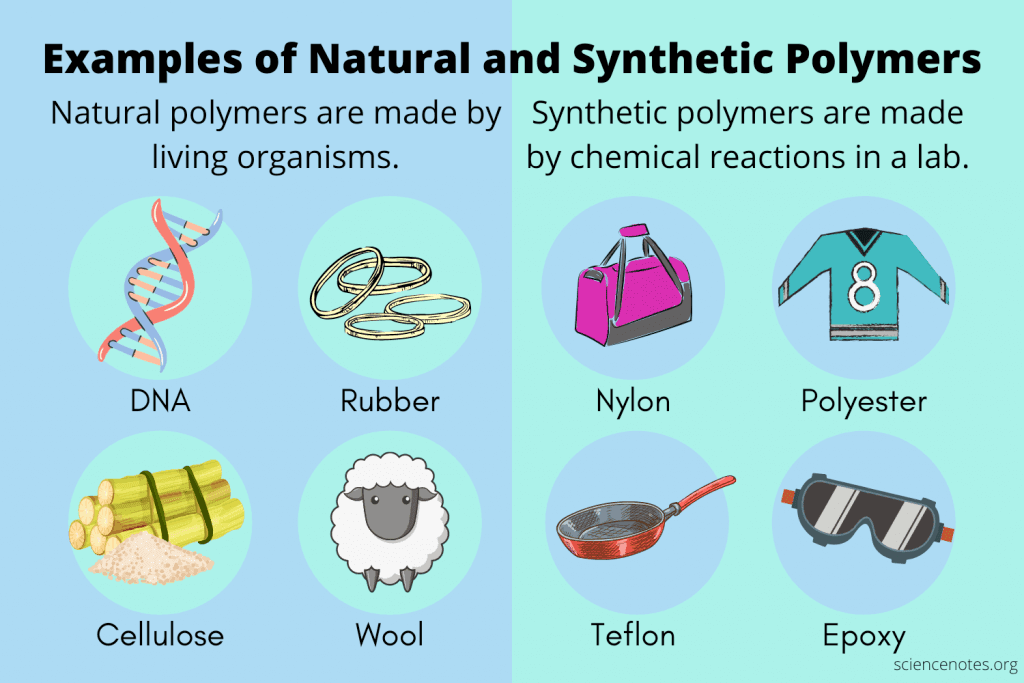
Sciencenotes.org. (2021). Natural and Synthetic Polymers [Image]. Retrieved from https://sciencenotes.org/wp-content/uploads/2021/03/Natural-and-Synthetic-Polymers.png
I'm not suggesting that you discard all the clothing you own that contains synthetic fibers, but as you evaluate your wardrobe and decide what to keep, it's worth considering the types of fabrics you own and their potential impact on your health. Moving forward, when making future purchasing decisions, take fabric composition into account and prioritize materials that are more sustainable and beneficial for both you and the environment.
Fast Fashion
The fashion industry is the broad, global sector that encompasses the design, production, marketing, and sale of clothing, footwear, and accessories. It includes high-end luxury fashion, designer brands, sustainable fashion, and mass-market clothing. The fashion industry operates on seasonal collections, innovation, and craftsmanship, often emphasizing quality and longevity in garments.
The fast fashion industry, on the other hand, is a subset of the fashion industry that focuses on rapid production cycles, low costs, and high turnover of trendy, inexpensive clothing. Fast fashion brands produce new collections at an accelerated pace ‒ sometimes weekly ‒ encouraging consumers to buy more frequently. This model relies on cheap labor, synthetic fabrics, and mass production, leading to significant environmental and ethical concerns, such as textile waste, pollution, and poor working conditions
The fashion industry alone generates 92 million tons of textile waste annually. The fast fashion industry is marred by numerous environmental and financial issues. One of the most significant concerns is textile waste, with an estimated 12.8% of global greenhouse gas emissions from production, transportation, and consumption attributed to this sector. This is more than the aviation and shipping industries combined. Moreover, synthetic fabrics like polyester shed microplastics into waterways during washing, polluting oceans and harming marine life. The "take, make, dispose" approach encouraged by fast fashion results in a staggering amount of waste, with each American generating an average of 82 pounds of textile waste per year, according to the Environmental Protection Agency (EPA).
If you open up the App Store and take a look at the top apps in the shopping category, you won't see apps focused on mindful minimalistic consumption choices. You will instead find fast fashion apps pumped with deals for what they purportedly describe as the best sales on the planet.
The average American consumer buys 68 pieces of clothing per year. That's roughly 6 new clothing items per month. Most of these purchases will end up as unused garments stuffed in our closets. Others are manufactured without quality in mind and will quickly fall apart then be discarded. Manufacturers often do not offer a warranty with the product. Longevity is no longer a guiding principle in the fast fashion world. Rushed consumption is.
The impacts of fast fashion are not to be underestimated. We can't talk about fast fashion without talking about plastic. Plastic not of the kind associated with plastic surgery. But with plastics used to make clothes. The petrochemicals used to make most types of fast fashion clothing are contributing to a plastic health crisis. The microplastics and nanoplastics released by the materials used in synthetic clothing are already having significant and concerning impacts on human health.
Many of the popular new fashion brands pushed on social media, produce clothing at Chinese factories. Most of these brands outsource the production of their clothes to the same sets of Chinese factories. They then market it to us under some brand-name in the US. To gain visibility for a particular brand they buy influence on social media.
Buying things has become more about trends rather than need. Because of these forces we often overlook whether or not we already own something still functional, that works fine. We end up making impulsive consumption decisions. If we already own something that is operating well, if it still allows us to accomplish our goals and serve its purpose, then why should we consume more based on an externally driven trending force that will fade into oblivion after yet another trend arises to replace it?
I know for many following the latest fashion design trends is important but it ends up being costly, time consuming, and wasteful. What's the point of chasing the latest fashion trends for a new cut of jeans or a darker shade of blue? It's pointless and hurting your financial health as well as our physical environment. Fashion trends don't interest me. I need things that last longer and by the time the fashion trend ends, I need those clothes to still be in wearable, good condition.
Fashion trends are a way we determine what to purchase based on external drivers rather than internally driven motives. We lose focus of longevity and the need for the product itself, and we end up with a surplus of useless things in our possession. Focus always on what you need and how long you'll need it for and make sure that the product is protected over the lifespan you intend for that product and you'll both maximize sustainability and minimalistic impact.
Most fashion brands come and go. Brands that strive for quality, usually endure. Clothing companies grab your attention with soft flashy clothes. Recycled polyester they might say. You get it home wear it a few times and it's wearing down or falling apart. The material starts to get rough or smelly.
A significant proportion of fast fashion clothing ends up in the trash, often much sooner than clothing from traditional, non-fast fashion brands. This is largely due to the lower quality of materials used in fast fashion, which are often synthetic and less durable, causing them to wear out quickly. Fast fashion also emphasizes trendy, short-lived designs, leading consumers to view these items as disposable once a trend fades. Overproduction and overconsumption further exacerbate the problem, as fast fashion's low costs encourage people to buy more clothing than they need, leaving many items unused and eventually discarded. Additionally, many fast fashion garments are made from blended fabrics that are difficult to recycle, and their affordability often devalues them, making consumers less likely to repair or maintain these items. According to the Ellen MacArthur Foundation, 87% of all discarded textiles are incinerated or landfilled, with fast fashion contributing significantly to this figure. This cycle highlights the environmental cost of fast fashion and underscores the importance of shifting to more sustainable purchasing habits, such as buying higher-quality, timeless pieces and supporting brands with sustainable practices.
Fast fashion significantly contributes to plastic and microplastic pollution due to its reliance on synthetic fibers like polyester, nylon, and acrylic, which are forms of plastic. These materials shed tiny plastic particles, known as microplastics, during both wear and washing. When garments are laundered, microfibers are released into wastewater systems, eventually reaching oceans and other water bodies, where they pose threats to marine life and ecosystems. Additionally, the rapid production and consumption cycle of fast fashion leads to large amounts of textile waste. Many of these discarded garments are not biodegradable, persisting in the environment and breaking down into microplastics over time. This cycle exacerbates environmental pollution, making fast fashion a major contributor to the global microplastic problem.
Plastic Clothing
Polyester, Nylon, Lycra (Spandex), and Acrylic are all derived from petrochemicals or fossil fuels. These materials in our clothing are contributing towards the global microplastics pollution crisis. When you skip polyester, nylon, or acrylic synthetic clothing what you end up with is usually a more natural product with less risk to your health. The tricky thing is navigating some of the false representation you might encounter in the marketing of the materials contained in the product. It can also be difficult to research whether or not the production and distribution process is actually sustainable.
I was shopping for socks that would last a long time without petrochemicals. I landed on one set of socks in particular that were marketed as "Merino Wool". I gravitated towards these socks. I didn't know if it was possible to actually manufacture socks entirely out of wool. It turns out though after closer examination of the materials that went into the socks that they were actually partially nylon and elastane (spandex).
Often when shopping for clothing manufacturers will describe the clothing as using recycled plastic bottles or plastic fibers. The problem is the clothing will still shed pieces of microplastics regardless of whether the material is from recycled sources or not. We still need to avoid synthetic plastic based clothing when alternatives exist that meet your requirements.
Avoid downstream plastic exposure by reducing the amount of plastic and synthetic materials you consume. These items seep plastic into the environment. Thus subjecting you to further ingestion risk as the plastic moves through the air, water, food, and life around you. There are too many synthetic things around us. Our possessions and environments are too removed from the natural world. This harms our immune systems and bodies.
Using textiles and clothing made from natural materials instead of synthetic ones can significantly reduce exposure to microplastics because natural fibers do not shed plastic particles into the environment. Synthetic materials such as polyester, nylon, and acrylic are essentially forms of plastic, and they release microfibers during wear and washing. These microfibers, a type of microplastic, enter wastewater systems, accumulate in water bodies, and eventually make their way into the food chain, posing risks to both ecosystems and human health.
Natural fibers like cotton, wool, silk, hemp, and linen are biodegradable, meaning they break down into organic matter over time rather than persisting as pollutants. When garments made of natural materials are washed, any fibers they shed degrade naturally, without contributing to the growing issue of microplastic pollution. Additionally, opting for natural materials reduces reliance on petroleum-based resources, which are used to produce synthetic fibers, thus further decreasing the environmental impact.
Beyond environmental benefits, wearing natural textiles can also reduce direct exposure to microplastics. Synthetic garments may shed microplastics not only during washing but also while being worn, potentially allowing these particles to come into contact with the skin or be inhaled. Choosing natural fibers minimizes this exposure, providing a safer and more sustainable option for both personal health and the environment.
Clothing Symbolism
I once bought a shirt with a Biodiesel logo on it, thinking it represented something meaningful at the time. It felt like a statement piece, aligning with a particular moment in my life. However, as the years passed, the logo became irrelevant to me. The shirt itself was still wearable, but its message no longer resonated, making it feel outdated. This experience made me question the role of branding in my wardrobe. Clothes are not just about representing external ideas or affiliations ‒ they serve a more fundamental purpose of protecting us and allowing us to express our personal style. When we choose clothing that is free from logos, slogans, or promotional designs, we give ourselves the freedom to wear it for longer without worrying about whether it still aligns with our beliefs or the current cultural moment.
Minimalism encourages us to make intentional fashion choices, focusing on quality, versatility, and longevity. Clothing covered in branding, slogans, or large graphics often comes with an expiration date ‒ not because the fabric wears out, but because its message becomes outdated or irrelevant. Have you ever had a favorite shirt where the printed design started to crack or peel, making it look worn out even though the fabric was still in good condition? Or perhaps you've hesitated to wear something because it carried a logo or phrase that no longer reflected your values? These distractions shorten the lifespan of clothing, leading to unnecessary waste and additional consumption. A simple, well-made garment without excessive branding can seamlessly transition between different settings ‒ casual outings, work, travel, or leisure ‒ without feeling out of place.
Choosing clothing without heavy branding also removes the subtle but ever-present role of marketing in our closets. A brand's logo on our clothing primarily serves as free advertising for the company, not as a benefit to the wearer. By opting for unbranded, high-quality pieces, we can focus on function and style rather than being walking billboards for corporations. This approach aligns with the principles of minimalism by ensuring that each piece in our wardrobe serves a lasting purpose. When we stop viewing clothing as a means of broadcasting corporate logos or temporary affiliations, we cultivate a wardrobe that is more timeless, practical, and uniquely our own.
Caring for Clothes
Just as brushing your teeth is a good investment in health and a money saver at the dentist's office, so is washing and drying clothes properly. Making your clothes last longer is a good financial investment. Proper laundry care can significantly elongate the lifespan of clothing by minimizing wear and tear while preserving the fabric's appearance and quality.
One of the simplest yet most effective ways to reduce our ecological footprint is by altering how frequently we wash and dry our clothes. By adopting a "less-is-more" approach to laundry, we can significantly decrease the demand for harsh detergents, energy-intensive drying cycles, and resource-intensive fabric production. Research suggests that washing clothes too often can actually cause them to deteriorate faster, as repeated exposure to water and detergent can lead to wear and tear on fibers. Fabrics such as wool, linen, and high-quality cotton naturally resist odors and dirt buildup, requiring fewer washes compared to synthetic materials. This shift in mindset ‒ washing only when necessary rather than out of habit ‒ can lead to significant resource savings over time.
Another crucial aspect of sustainable clothing care is choosing the right washing and drying processes for each garment. For example, delicate items like wool sweaters require gentle cycles with biodegradable detergents to prevent shrinkage and pilling. Investing in specialized laundry bags or mesh bags can also help protect our most valuable clothes from damage during washing and drying. These bags provide an extra layer of protection against snagging, creasing, and fabric abrasion, ensuring that our treasured garments remain intact for years to come. By making these simple adjustments to our laundry routine, we can significantly reduce the environmental impact of clothing care.
As consumers, we have the power to drive change by making conscious choices about how we care for our clothes. This shift in perspective can also inspire others to join us, creating a ripple effect of positive change that benefits both people and the planet. These small, conscious changes in how we care for our clothes can collectively lead to a significant reduction in environmental impact while also saving money on utilities and replacement clothing over time.
Line Drying
Drying is just as important as washing when it comes to extending the lifespan of our clothing. When time permits, hanging clothes instead of putting them in the dryer is very beneficial. Not over drying helps preserve the integrity of the fabric. Hanging or laying clothes flat to dry also minimizes wrinkles and prolongs the lifespan of elastic fibers, buttons, and other delicate components.
Drying them in the machine might not actually be necessary. Air dry them to reduce wear on the socks and maximize longevity and make it comfier for longer. Air drying clothing outside on a line or drying rack can be quick. Drying clothes in this manner is better for the environment and your wallet. Line dry as many of your clothes as possible. It may be difficult though given weather conditions in your current location or time constraints.
Many people will find line drying to feel somewhat like exercise. It can take awhile to put shirts on a hanger; to sort them out on the line. You will need to prevent them from falling to the ground when the wind picks up. The good part of this is shirts and pants might have to be hung anyway. You aren't doing any extra work. You can just take them off the line while still on the hanger and move them to your closet or wardrobe.
After you've finished washing your clothes, line drying is a way to meditate and reflect. Life slows down a bit. It's relaxing to hang your clothes. There is a sort of meditative peace you'll feel while hanging your clothes. When you line dry them, you'll be able to listen to podcasts, a language learning track, or some music. Alternatively you can just listen to the earth. Time slows down a bit when you're doing this. You'll feel a bit of stillness before or after embarking on another busy day.
If your family or friends are around and unoccupied ask them if they want to help. Line drying is sort of like a delayed gratification type of experience. The dividends will not necessarily be realized immediately, but over time the benefits are profound. Clothes will last longer, feel better, and you will save quite a bit of money by elongating the lifespan of your clothing. Just make sure not to leave clothes out too long in the sun to prevent fading. Hangers that have indentations are also useful to prevent the neckline from widening and reducing the likelihood that gravity pulls your clothes tumbling down.
When line drying start with towels first. These dry outside on the line most easily and will save the most energy. You'll save so much energy by hanging these outside and your towels will be fresher.
Then work your way on to shirts and shorts. Use hanging pins to prevent the sheets from falling off the line or bunching up. When sheets get bunched up on the line without being folded some time in the middle they can end up with wrinkles
If you're concerned about color fading from line drying clothing outside, try turning your clothing inside out while drying to avoid fading. Fading isn't an issue as long as you monitor your clothes and don't leave them out beyond the time it takes for them to dry sufficiently.
Hanging them immediately after use rather than relying on the dryer can save a meaningful amount of energy over the course of a year. Drying your clothes outside is better for your health. Sun can kill mold, viruses, and bacteria on your clothing. It also helps make clothes smell better. Hanging your clothes outside can remove odors and enhance freshness also. By breaking down the DNA of bacteria or fungus living on your clothes and essentially killing it, direct sunlight also helps to remove odors.
Sometimes the simplest techniques can add fresh life to your belongings. Like taking a wet towel and letting it sit in the sun to dry. Maybe putting your toothbrush some of your other belongings in the sunshine to give them a little bit of fresh air. Simply taking your reusable bottle out of circulation for a day or two to let it dry out completely. Many studies have come to the same sort of conclusions, that the best way to clean many of our things, is also the most simple and natural way.
"We show that the smell of line-dried laundry is due to the unique combination of traces of atmospheric hydrocarbons, sunlight and a wet fabric surface. This surface photochemistry is likely to be widespread in the environment on surfaces of natural materials." The study goes on to find, "We therefore propose that oxidative photochemistry on the surface of the drying laundry is responsible for the production of the fresh smell." Pugliese Silvia, Jespersen Malte Frydenlund, Pernov Jakob Boyd, Shenolikar Justin, Nygaard Jesper, Nielsen Ole John, Johnson Matthew S. (2020) Chemical analysis and origin of the smell of line-dried laundry. Environmental Chemistry 17, 355-363. https://doi.org/10.1071/EN19206
Even if you can't completely line dry all of your clothes could you at least do it partially. Can you put it in the dryer for a bit less time then let it hang on the line to finish it off?
When you do have to use the dryer to dry your clothes keeping track of the temperature settings and the duration of the drying cycle is important. Monitoring the amount of heat applied saves energy and money. A lot of time the dryers auto drying settings will still end up over drying clothing. Each cycle also causes microscopic damage to the material. While this isn't usually easily visible, you can find the evidence in your dryer's lint tray. As your clothes dry keep an eye on the lint trap fabric levels. You can always tell if over dried if you have a lot of lint in dryer. If at the end of a dryer cycle, there's quite a bit of lint from clothes, it generally means the clothes were over dried or that materials were put in the dryer that should've been hung to protect the clothing from losing excess fabric.
Bathroom Dryers
In Japan, many bathrooms are equipped with a system known as 浴室乾燥機, よくしつかんそうき (yokushitsu kansouki), or Yokushitu (浴室) literally means "bath room" (the room where you bathe), Kansou (乾燥) means "drying", Ki (機) means "machine" or "device", altogether, bathroom dryers. These systems function by blowing warm, dehumidified air into the bathroom, creating an ideal environment for drying clothes. This method is gentler on fabrics compared to traditional line drying, as it eliminates exposure to direct sunlight, which can cause colors to fade and fibers to weaken over time. Additionally, the controlled indoor environment reduces the risk of environmental contaminants, such as pollen or pollution, coming into contact with the garments.
Unlike line drying, which can cause fabrics to lose their shape and become misshapen, or traditional tumble dryers, which can be abrasive and damage delicate fibers, the humid environment in a Japanese bathroom-drying setup helps to preserve garments' texture and integrity. This method also allows for a more controlled temperature and humidity level, making it an ideal option for washing and drying sensitive fabrics like wool and silk. When comparing various drying methods, traditional line drying exposes clothes to the elements, which can lead to wear and tear, while tumble dryers, though efficient, can be abrasive due to constant tumbling and high heat, potentially causing shrinkage and fabric damage. In contrast, bathroom dryers provide a balanced solution by offering a controlled, gentle drying environment that maintains the integrity of the clothing.
For those without access to a bathroom dryer, investing in a Japanese-style clothes drying rack or clothesline is a practical alternative. These tools allow for air drying indoors, protecting garments from external elements and reducing reliance on energy-intensive appliances, thereby promoting both fabric longevity and environmental sustainability.
Wash Frequency
How often do we really need to wash a piece of clothing? Can you wear it longer before you wash it? The longer we wear a piece of clothing before we put it through a wash cycle is important because less wear occurs to the clothing and less energy is used to wash it. In other wards our wash is amortizing over a longer period between wash cycle periods.
Putting clothing through minimal laundering cycles is the best way to save money on clothing. Clothes will last longer and look better. You'll get more out of fewer pieces of clothing.
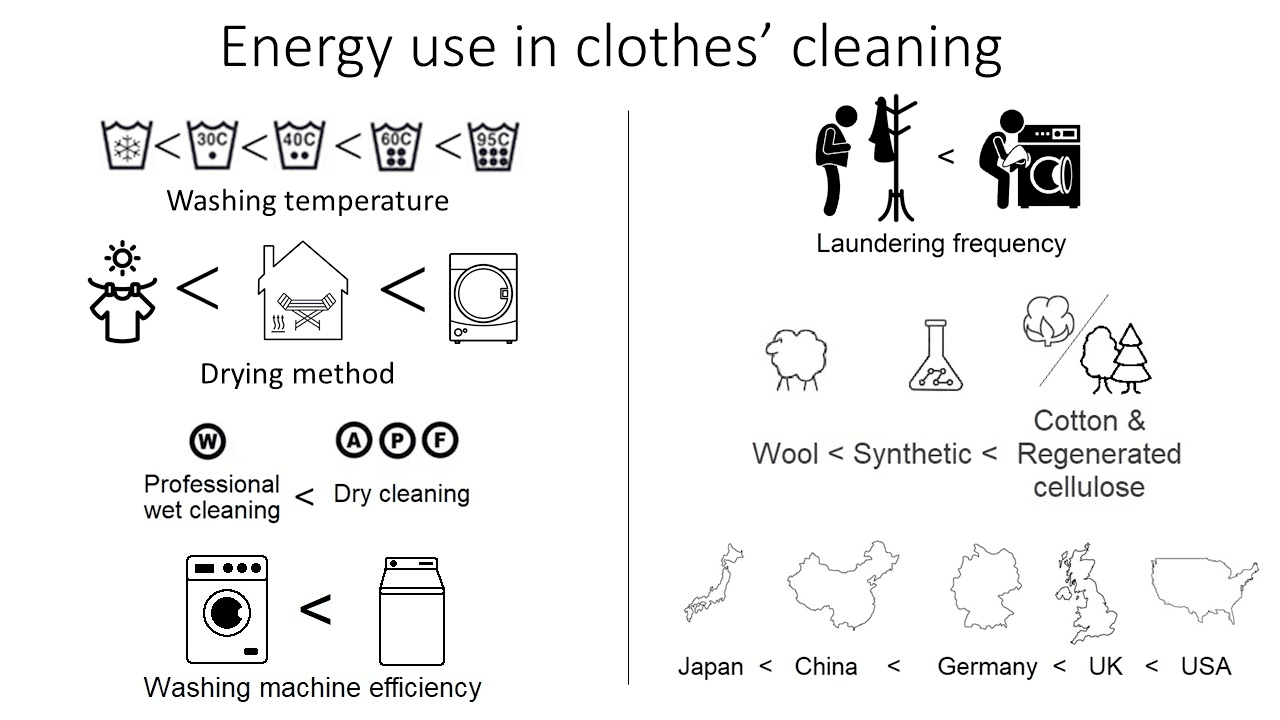
Laitala K, Klepp IG, Kettlewell R, Wiedemann S. Laundry Care Regimes: Do the Practices of Keeping Clothes Clean Have Different Environmental Impacts Based on the Fibre Content? Sustainability. 2020; 12(18):7537. https://doi.org/10.3390/su12187537
The type of fabric used to make clothes significantly impacts the ability of the clothes to control odor and last longer between wash cycles. It is also critical to store clothes properly so they have amble air flow when not in use. You don't want to crinkle them up and throw them in a pile. It's worthwhile to take the time to hang them or fold them so they are in a good place to sit tight until you are ready to utilize them again.
Sometimes I will put clothes outside on the laundry line for a bit to help the piece get a little air or dry off if it got wet. Throwing something in the laundry basket while it's still wet isn't good for the clothing or your health. Once microorganisms start to grow in abundance on your clothing it becomes increasingly difficult to remove odors. It is also harder to bring the clothes back to looking and functioning their best.
* * *
The importance of taking good care of clothes extends beyond the direct impacts on our lives. Research has shown that our water is impacted by the types of clothes we buy and the washing process utilized to clean them. According to the study, "Recent estimations have assessed that synthetic clothes contributes by about 35% to the global release of primary microplastics to the world oceans, thus becoming the main source of microplastics."
They go on to say, "Results showed that microfibres released during washing range from 124 to 308 mg for kg of washed fabric depending from the type of washed garment that corresponds to a number of microfibres ranging from 640,000 to 1,500,000."
Reference:
De Falco, F., Di Pace, E., & Cocca, M. (2019). The contribution of washing processes of synthetic clothes to microplastic pollution. Scientific Reports, 9, Article number: 6633. https://www.nature.com/articles/s41598-019-43023-x
Washing synthetic clothing using a delicate or gentle cycle is effective in minimizing the amount of microplastics shedding while doing laundry. The delicate or gentle cycle in washing machines is designed to minimize agitation and friction applied to clothing. While these cycles may not completely eliminate microplastics shedding, they can help mitigate it compared to more aggressive washing cycles.
Washing clothing using lower temperatures will also help prevent synthetic fibers from becoming more brittle and prone to shedding microplastics.
Avoid detergent pods when possible. They are known to contribute to the plastic pollution crisis. Detergent pods leak large amounts of untreated PVA (polyvinyl alcohol) which is used to create the pods. They are often marketed as eco-friendly, and biodegradable but that's not usually the case.
Polyester is a synthetic fiber commonly used in clothing and textiles. When polyester clothing is washed, tiny fibers called microplastics can shed from the fabric and enter the water supply. These microplastics are small enough to pass through wastewater treatment systems and can end up in rivers, lakes, and oceans.
"Plastic residue has demonstrated negative effects on the environment and to the food chain by acting as vectors of harmful contaminants, but the literature on PVA having a similar effect is largely lacking. Studies have indicated potential harmful effects that polyvinyl alcohol can have on the environment, including sequestering heavy metals and interfering with crop yields," - Dr. Charlie Rolsky Director of Science for Plastic Oceans International
When our debris washes off into the water that's really no different than if they were to wash right off into us. Since we depend on water sources directly or through the food we eat we end up eating that runoff.
Repair Benefits
Fixing things helps save money while also reducing negative environmental impacts. Take for example the wearing down of an insole in a pair of shoes. If the sole is still good in your shoes, just get a footbed instead. Getting a shoe insert will save money and resources while making your shoes last longer so you have more memories with them.
- What are the repair options available for something you are about to purchase?
- How much does the company stand behind their product and for how long?
- How difficult is it to find repair guides for the item?
- Does the manufacturer make it easy to repair or replace an item?
- What's the warranty structure like?
- Will the warranty last at least as long as I expect this type of product to last if I do my due diligence to protect its longevity?
- Does the company's approach seem to be against planned obsolescence?
- Does the company actually place equal importance on profit and sustainability? Not sustaining the growth of their bottom line, but sustaining the health of our ecosystems.
Fixing items instead of replacing them is one of the simplest and most effective ways to save money while also reducing environmental impact. Take those shoes I mentioned earlier, for example ‒ when the insole wears down, many people assume it's time to buy a new pair. However, if the outer sole is still in good condition, replacing just the footbed or using a shoe insert can restore comfort and extend the lifespan of the shoes at a fraction of the cost. A high-quality insole can cost between $10 and $50, whereas a new pair of shoes might cost $100 or more. By making small repairs instead of discarding the entire product, you can avoid unnecessary spending and get more use out of what you already own.
Repairing everyday items fosters a more sustainable mindset, encouraging a shift away from disposable consumer culture and toward a lifestyle that values longevity, quality, and responsible consumption.
By extending the life of our existing shoes, and other items, through repair, we can reduce the demand for these resources and lower our carbon footprint. This approach also helps to conserve landfill space and minimize textile waste.
Fixing things is not just about saving money and reducing environmental impact; it's also about preserving memories and experiences. When we fix something rather than replacing it, we're more likely to hold onto it for years to come, filling them with stories and emotions that make the item even more special. In the case of our shoes, a refurbished sole can become an integral part of the shoe's history and character, adding value and significance to our everyday items.
Repairing things can save money compared to buying new items in several ways:
- Lower Cost of Repair: In many cases, repairing a broken or damaged item is significantly cheaper than purchasing a brand new replacement. Repair costs typically involve the price of replacement parts, labor, and any additional materials needed, which are often a fraction of the cost of buying a new item.
- Extended Lifespan: Repairing items extends their usable lifespan, allowing you to continue using them for an extended period rather than replacing them prematurely. By addressing minor issues or wear and tear through repairs, you can avoid the need to buy new items frequently, saving money over time.
- Avoidance of Replacement Costs: When you repair a broken item instead of replacing it, you avoid the expense of purchasing a new item at full retail price. This can lead to significant savings, especially for high-value items such as appliances, electronics, or furniture, which can be costly to replace.
- Prevention of Additional Expenses: Repairing items promptly can prevent further damage or deterioration, which could result in more costly repairs or replacements down the line. By addressing issues early and maintaining items in good condition, you can avoid the need for more extensive repairs or replacements in the future.
- Reduction of Waste: Repairing items instead of discarding them reduces waste generation and minimizes the environmental impact associated with manufacturing new products. By prolonging the lifespan of existing items, you contribute to a more sustainable and resource-efficient economy while saving money on new purchases.
- Increased Value of Possessions: Items that have been well-maintained and repaired as needed retain their value better than items that are neglected or replaced frequently. By investing in repairs, you preserve the value of your possessions, making them more desirable if you choose to sell or donate them in the future.
Kintsugi
Kintsugi is the Japanese art of repairing broken pottery with lacquer mixed with powdered gold, silver, or platinum. The goal of kintsugi is to resourcefully repair broken objects. Rather than disposing of damaged items and acquiring new ones, kintsugi practitioners use available materials to mend and enhance the original object, embodying principles of sustainability by extending the life cycle of products. Kintsugi celebrates imperfection and the beauty of broken objects.
The visible repairs in kintsugi tell a story of resilience, transformation, and renewal. By highlighting the history and journey of the object, kintsugi fosters a deeper connection between individuals and their possessions, encouraging mindful consumption, responsible stewardship, and a shift away from the disposable culture prevalent in modern society.
Kintsugi invites philosophical reflection on the nature of impermanence, change, and the inherent value of objects. This contemplative approach encourages individuals to reconsider their relationship with material possessions, fostering a sense of gratitude, mindfulness, and interconnectedness with the environment, which are essential aspects of sustainable living.
Putting It Into Practice
What you can do today:
- Choose one drawer or shelf and remove what you haven't used in a year; sell, donate, or pass it on.
- Check the fiber content of your next clothing purchase and favor natural or regenerative materials.
- Line dry one load of laundry, and turn your water heater or dryer setting down a notch.
Longer-term shifts:
- Repair before replacing ‒ learn one basic fix, like a footbed, a button, or a patch.
- Curate a small, intentional wardrobe of durable pieces instead of chasing trends.
- Favor brands that stand behind their products with warranties and repair support.
By the numbers:
- Tumble-drying a single load releases roughly 1.5–2.4 kg of CO₂; line-drying avoids nearly all of it, saving a regular user on the order of a few hundred kilograms a year (appliance lifecycle estimates).
- Extending a garment's active life by nine months lowers its carbon footprint by about 20–30% ‒ which is exactly what repairing before replacing and choosing durable pieces accomplishes (WRAP, "Valuing Our Clothes").
Comments
Loading comments…