- Part
- Part III: Minimalism in Practice · Chapter 20
Food Sustainability
"Be content with what you have; rejoice in the way things are. When you realize there is nothing lacking, the whole world belongs to you."
--- Lao Tzu, Tao Te Ching
Through our daily lives we interact with the natural world. These interactions become part of us. Through the air we inhale, the water we drink, the food that provides us sustenance. We are all part of the natural world and the natural world is part of us. Clean water, good air quality, a stable climate, sustainable food sources. That's the key to a healthy existence isn't it? In general, if something can damage the quality of your water or air, it's not sustainable for your health. Usually if something isn't sustainably sourced or contributing towards sustainable practices, it isn't healthy.
Minimalists care about the health of their bodies as well as the ecosystems utilized to provide our sustenance. Finding ways to maximize our personal health sustainably while contributing towards efforts to make food healthier by improving the health of our physical environment needs to always be part of our endeavors. Because minimalists focus on reducing the amount of things they consume what's left is more room to focus on leading a healthy lifestyle. Food is a core part of leading a minimalistic healthy life.
How does minimalism even apply to eating? Eating minimally refers to eating what you need to sustain your health. It's abstaining from eating excess. It's minimizing waste.
Talking about sustenance is absolutely critical. Eating minimally and being mindful of food consumption is the most essential way any person on Earth can contribute to protecting their own health as well as the wellbeing of the entire planet. There is nothing more imperative towards attaining a sustainable existence than understanding how to utilize minimalism to bring balance to our sustenance.
Overeating
A co-worker told me once, "A moment on the lips, forever on the hips." I wish I had heard that maxim much earlier in life! It would have saved me quite a bit of work at the gym.
Reducing the number of calories we intake is good for our health and for the planet. Minimalists understand that being being healthy is tightly coupled with the amount of food we consume. The body keeps a balanced book. Use the amount of energy you consume, or it will be stored away as fat. Use less than the amount of energy taken in and you will burn away fat energy reserves. When we shift away from the natural energy balance our bodies take on too much added weight. The negative impacts on our health and the planet of excess energy ingestion are one of the main drivers of climate change and ecosystem losses. Eat minimally. Never overindulge in consuming excess food. The beneficial health impacts of eating only for full sufficiency cannot be understated.
Obesity is against all minimalist principles. Obesity is a waste and anti-minimalism because of all the extra resources needed for a person who is overweight and its impact on the planet. It isn't just the extra resources consumed. Being obese leads to increased costs of healthcare and the person having to spend more time in the hospital or going to clinics for treatment. There are more materials wasted when a person spends more time at a hospital or is admitted to the hospital more frequently due to poor health from obesity. Increased cardiovascular risks as well as risks of cancer and death are higher.
Obesity can have indirect effects on climate change through its influence on energy consumption, transportation patterns, and food systems. While obesity itself is not a direct cause of climate change, the societal factors associated with obesity can contribute to environmental degradation and greenhouse gas emissions. Here are some ways in which obesity can impact climate change:
Increased Energy Consumption: Individuals who are obese often require more energy for daily activities and transportation compared to those with healthy body weights. This increased energy demand can lead to higher greenhouse gas emissions from fossil fuel combustion for electricity generation and transportation.
Transportation Emissions: Obese individuals may be more reliant on motorized transportation, such as cars and airplanes, due to physical limitations or discomfort with active modes of transportation like walking or cycling. Higher rates of motorized transportation contribute to increased carbon emissions and air pollution, exacerbating climate change and environmental health impacts.
Food Production and Consumption: The production and consumption of energy-dense, processed foods associated with obesity can have significant environmental impacts. Industrial agriculture, which produces many calorie-dense foods, contributes to deforestation, habitat destruction, water pollution, and greenhouse gas emissions from fertilizer use, livestock production, and transportation.
Food Waste: Obesity-related dietary patterns may contribute to higher levels of food waste, as individuals may overconsume or discard excess food. Food waste is a significant contributor to greenhouse gas emissions, as decomposing organic matter in landfills releases methane, a potent greenhouse gas.
Healthcare Infrastructure: Obesity-related healthcare infrastructure, including hospitals, medical equipment, and pharmaceuticals, consumes resources and contributes to carbon emissions associated with healthcare delivery. The energy-intensive nature of healthcare facilities and medical procedures can indirectly contribute to climate change.
Caloric Intake
Like a power plant, the human body burns fuel to make energy. I remember reading the following passage:
"According to Liebig, man's body is a stove, and food the fuel which keeps up the internal combustion in the lungs. In cold weather we eat more, in warm less. The animal heat is the result of a slow combustion, and disease and death take place when this is too rapid; or for want of fuel, or from some defect in the draught, the fire goes out."
- Thoreau, Walden
The passage above is not totally scientifically proven, but I think it presents an interesting concept slightly grounded in fact. Thinking about the body as a sort of engine and food as the fuel necessary to keep it running. It's also worth appreciating how the passage considers how extremely elongated deviations from normal dietary sustenance might cause health problems. It raises another important thought, does eating less make one feel less hot?
So it turns out eating less can actually make one feel less hot. Eating less, particularly through caloric restriction, can lead to a slight reduction in body temperature. This effect happens because eating less impacts metabolism, which in turn influences body temperature regulation.
- When you consume fewer calories, your body often adapts by lowering its metabolic rate to conserve energy. Metabolism generates heat as a byproduct, so a lower metabolic rate generally means less internal heat production. This adaptive response to a lower caloric intake can result in a minor drop in body temperature.
- Additionally, eating triggers a process known as *diet-induced thermogenesis*, where the body burns calories to digest and absorb nutrients. With reduced food intake, there is less thermogenic activity from digestion, which leads to a slight decrease in the heat generated.
- Caloric restriction can also influence hormones that help regulate body temperature, such as thyroid hormones. A lower food intake may reduce levels of thyroid hormones, which play a role in maintaining metabolic rate and body temperature.
- Furthermore, the body's response to reduced caloric intake often involves energy conservation, prioritizing essential functions and reducing expenditure on non-essential processes like generating heat. This is part of the body's adaptive mechanism to preserve resources when food is scarce, which can cause a slight dip in body temperature.
While the effect is generally small (typically less than a degree Fahrenheit or Celsius), people on restricting the amount of calories they eat, such as through low-calorie diets, often report feeling colder.
Autophagy
Recently released research has shown that minimizing our caloric intake might increase the longevity of our lives. Our health improves by restricting the amount of calories we consume. Calorie restriction involves reducing calorie intake without malnutrition, typically by around 20-40%.
Calorie reduction stimulates a process in the body called autophagy. The term "autophagy" originates from the Greek words "auto" (self) and "phagy" (eating), indicating that cells essentially consume themselves during this process. Autophagy is a cellular process that plays a crucial role in maintaining cellular homeostasis through the degradation and recycling of damaged organelles, misfolded proteins, and other cellular components. Understanding the mechanisms of autophagy and its regulation holds promise for developing new therapeutic strategies for treating a wide range of human diseases.
Both caloric restriction and autophagy have been implicated in lifespan extension and aging. Studies in various organisms, including yeast, worms, flies, and rodents, have shown that caloric restriction can improve health and extend lifespans by delaying the onset of age-related diseases. Autophagy can also contribute to the anti-aging effects of caloric restriction by promoting cellular maintenance and reducing the accumulation of damaged components associated with aging.
Caloric restriction has been shown to induce autophagy in cells. Both caloric restriction and autophagy modulation are being investigated as potential therapeutic strategies for treating age-related diseases, metabolic disorders, neurodegenerative diseases, and cancer. Pharmacological agents that mimic the effects of caloric restriction or enhance autophagy are being explored as potential interventions to promote health and longevity.
Avoiding Snacking
Do you ever get the urge to snack in between meals? I do. People have written books about preventing snack binges. Even more has been written about how to snack healthfully. Finding ways to limit overindulgent snacking is one of the most impactful ways to reduce excess caloric intake. One practice that has been particularly useful for me in preventing the intake of unneeded excess snacking calories is brushing my teeth after every meal. Essentially going from brushing twice a day at least 30 minutes after meals to three times a day, even if it's just light brushing with a tiny bit of toothpaste and a soft toothbrush, has helped me snack minimally.
Building a habit of brushing your teeth after completing a meal will allow you to set a break between eating periods. Dentists say if you can wait at least 30 minutes after eating or drinking before brushing, that's better for our teeth. During that period, the tooth enamel will remineralize as the acid loses its effect. But the bacteria stay around unless we remove them by brushing and flossing. You want to get the taste of food out of your mouth. Replacing the flavors of a meal just finished, with the taste of minty toothpaste allows you to put a sort of mental and physical block between meals. It's like we are reminding ourselves we have finished an eating period, we won't be moving on to the next eating session for several hours. This helps reduce the impulse snacking urges. Who wants to lose that minty taste and wonderful fresh breath that brushing your teeth provides? This will help reduce the urge to incessantly snack in between meals, which often causes people to intake more calories than they can consume within a given day.
Maximum Nutritional Intake
For food try to bake or steam if possible. To preserve the flavor and nutritional content. The idea is to minimize the amount of vitamins lost through the cooking process so we can eat less but get more out of it to improve not just our own health but the health of the planet as a whole. Getting more out of less is one of the principal convictions of a minimalist.
Steaming involves cooking food with steam, which helps to preserve water-soluble vitamins such as vitamin C and B vitamins. Since the food is not submerged in water, these vitamins are less likely to leach out into the cooking water, resulting in higher nutrient retention.
When cooking at home, you can choose healthier cooking methods such as baking, grilling, steaming, or sautéing with minimal oil, instead of relying on frying or deep-frying methods commonly used in restaurants. This helps reduce the intake of unhealthy fats and calories.
Baking and steaming typically involve cooking food at lower temperatures compared to frying or grilling, which can help to minimize nutrient loss. High-heat cooking methods can cause the breakdown of certain nutrients, such as vitamin C and folate. Baking and steaming at lower temperatures help to preserve these delicate nutrients. Cooking in these ways generally requires less added fat compared to frying or sauteing, which can contribute additional calories and unhealthy fats to the dish. By using less fat, these cooking methods help to reduce the overall calorie and fat content of the food, promoting a healthier diet.
Baking and steaming can help to preserve the natural texture, color, and flavor of the food, as they involve gentle cooking methods that do not overly denature proteins or break down other components of the food. This can make the food more appealing and enjoyable to eat, encouraging consumption of nutritious foods.
Don't overcook things in the oven or microwave. Doing so wastes energy and can ruin food. This can create additional food waste. It can also cause food to lose some of its nutritional value.
Overheating or overcooking food in the microwave can lead to both increased food waste and reduced nutritional value. When food is overheated, it often becomes dry, tough, or unpalatable, making it less likely to be consumed and more likely to be discarded. This contributes to food waste, particularly when larger portions or entire meals are ruined. From a nutritional perspective, excessive heat can destroy heat-sensitive nutrients such as vitamin C and certain B vitamins, which are crucial for health.
Overcooking can also degrade the texture, flavor, and appearance of food, reducing its appeal and nutritional satisfaction. For example, vegetables exposed to high heat for too long may lose water-soluble vitamins and antioxidants, diminishing their health benefits. In addition, burnt or charred food can develop potentially harmful compounds, such as acrylamides in starchy foods, further discouraging consumption and leading to waste. Using microwaves more carefully, such as stirring food and using lower power settings, can help preserve both the food's quality and its nutritional value.
* * *
The closer you get to the raw source of food, the more natural and refined it is. Moving towards the source reduces exposure to microplastics and other contaminants or toxic chemicals accumulated along the production line. Looking at broccoli for example, you start off with just a raw single block broccoli at the store, not wrapped in plastic using your own reusable bag you minimize to the upmost amount of plastic exposed to Broccoli combined into a soup that's been put in a plastic container that you heat up in the microwave would amount of exposure you would have micro plastics significantly you think about the cheese and all the other ingredients I would go into some sort of broccoli soup and then as it goes along the line, the amount of toxins and chemicals that get introduced into the final food product rises, exponentially along every step of the way it's the same sort of thing when you go to Starbucks and you get oats and apples that they heat up in a container and serve to you with a container that works micro plastics with food that's processed because they receive things in plastic shipments and plastic wrap, etc. etc. along the line of plastics have consuming rises significantly as well as other toxins
Slow Your Roll
Eating slowly is one of the simplest yet most effective ways to reduce overall food consumption while improving digestion and nutrient absorption. When you eat too quickly, your body doesn't have enough time to register fullness, often leading to overeating. Studies show that it takes about 20 minutes for the brain to receive signals from the stomach indicating that you've had enough food. By slowing down, you allow your body to naturally regulate how much you eat, reducing unnecessary calorie intake. Additionally, chewing food thoroughly breaks it down more effectively, making it easier for your digestive system to process and absorb nutrients, which can improve overall gut health. Proper digestion also reduces bloating and discomfort, allowing for a more enjoyable eating experience.
Mindful eating enhances this process by encouraging full engagement with your meal. When you focus on the flavors, textures, and aromas of your food, you become more aware of what and how much you're consuming. This heightened awareness allows you to better assess your true level of hunger, preventing mindless snacking or overindulgence. Many people eat while distracted---watching TV, scrolling on their phones, or working---which can lead to consuming more than necessary without truly enjoying the meal. By creating a habit of eating with intention and focus, you can develop a healthier relationship with food and avoid the pitfalls of overconsumption.
Beyond personal health benefits, eating slowly and mindfully also helps foster gratitude for the food on your plate. Taking the time to appreciate where your food comes from, the effort involved in preparing it, and the nourishment it provides can make meals more fulfilling. In a fast-paced society that often prioritizes convenience over quality, slowing down during meals serves as a reminder to be present and appreciate the small moments. This approach not only helps optimize food intake based on actual hunger levels but also promotes a sense of satisfaction and enjoyment, reducing the urge to seek excess food for fulfillment.
The Footprint
Being aware of how the food we eat impacts the world around us is a critical aspect of minimalism. Recognizing which food types have the worst impacts on emissions. Eat the proteins having the worst environmental impact sparingly. It might be too extreme for you to commit to removing it entirely from your food preferences but consider reducing it or substituting it for a more sustainable alternative.
Here is a list of foods having the worst environmental impacts:
- Beef: Beef production typically has one of the highest environmental footprints among food categories due to factors such as methane emissions from cattle, land use change (deforestation for pasture and feed crops), water consumption, and soil degradation.
- Lamb: Similar to beef, lamb production is resource-intensive contributing heavily to greenhouse gas emissions growth, deforestation, and water consumption, although it generally has a slightly lower environmental impact compared to beef on a per-serving basis.
- Cheese: Cheese production, particularly from dairy cattle, is associated with high environmental impacts due to the resources required for milk production, including land, water, and feed. Additionally, cheese production generates greenhouse gas emissions and may contribute to deforestation and water pollution from dairy waste.
- Pork: Pork production has environmental impacts related to feed production (such as soy and corn), water consumption, and waste management. Intensive pig farming practices can lead to water pollution from manure runoff and contribute to deforestation for feed production.
- Salmon (Farmed): Farmed salmon often has significant environmental impacts, including pollution from fish waste and excess feed, habitat destruction (e.g., mangrove deforestation for shrimp farms), and disease transmission between farmed and wild fish populations.
- Shrimp (Farmed): Shrimp aquaculture can have high environmental impacts, including habitat destruction, water pollution from effluents and chemicals, mangrove deforestation, and ecosystem disruption.
- Avocado: Avocado production, particularly in regions with water scarcity, can contribute to deforestation, habitat loss, soil erosion, and water stress due to intensive irrigation requirements. Additionally, the transportation of avocados over long distances can contribute to greenhouse gas emissions.
- Almonds: Almond cultivation, particularly in water-stressed regions such as California, USA, can have significant environmental impacts, including water depletion from aquifers and rivers, habitat destruction, and soil degradation. Almond orchards require substantial irrigation, leading to competition for water resources and ecological concerns.
- Palm Oil: Palm oil production is associated with extensive deforestation, particularly in tropical rainforest regions of Southeast Asia and Africa. Deforestation for palm oil plantations contributes to habitat loss, biodiversity decline, soil erosion, and greenhouse gas emissions from land-use change.
- Coffee (Non-Shade Grown): Conventional coffee production, particularly in monoculture plantations, can lead to deforestation, habitat destruction, soil erosion, water pollution from agrochemicals, and loss of biodiversity. Non-shade grown coffee may have higher environmental impacts compared to shade-grown or organic coffee.
* * *
Agriculture often involves the conversion of forests, grasslands, and other natural ecosystems into croplands or pasturelands. This process of land clearing, also known as deforestation, can have profound impacts on groundwater levels. Trees and vegetation play a crucial role in regulating the hydrological cycle by intercepting rainfall, promoting infiltration, and reducing runoff. When forests are cleared, the loss of vegetation can lead to increased surface runoff, soil erosion, and reduced groundwater recharge rates.
Modern agricultural practices, such as monoculture and intensive farming, can exacerbate the impacts of agriculture on groundwater resources and deforestation. Monoculture involves the cultivation of a single crop over large areas, which can deplete soil nutrients, increase vulnerability to pests and diseases, and lead to the overuse of water resources. Intensive farming practices, such as excessive use of fertilizers and pesticides, can further degrade soil and water quality, leading to increased pollution and reduced groundwater recharge.
Livestock grazing is another common agricultural activity that can contribute to deforestation and groundwater decline. Overgrazing by livestock can damage vegetation, reduce soil stability, and increase erosion rates, leading to loss of habitat, soil degradation, and altered hydrological processes. In addition, the water requirements of livestock for drinking and forage production can further strain groundwater resources, especially in arid and semi-arid regions.
Agriculture accounts for a significant portion of global water usage, with irrigation being a primary driver of groundwater depletion. In regions where rainfall is insufficient to meet crop water requirements, farmers rely heavily on groundwater for irrigation. Excessive extraction of groundwater for irrigation purposes can lead to aquifer depletion and declining water tables
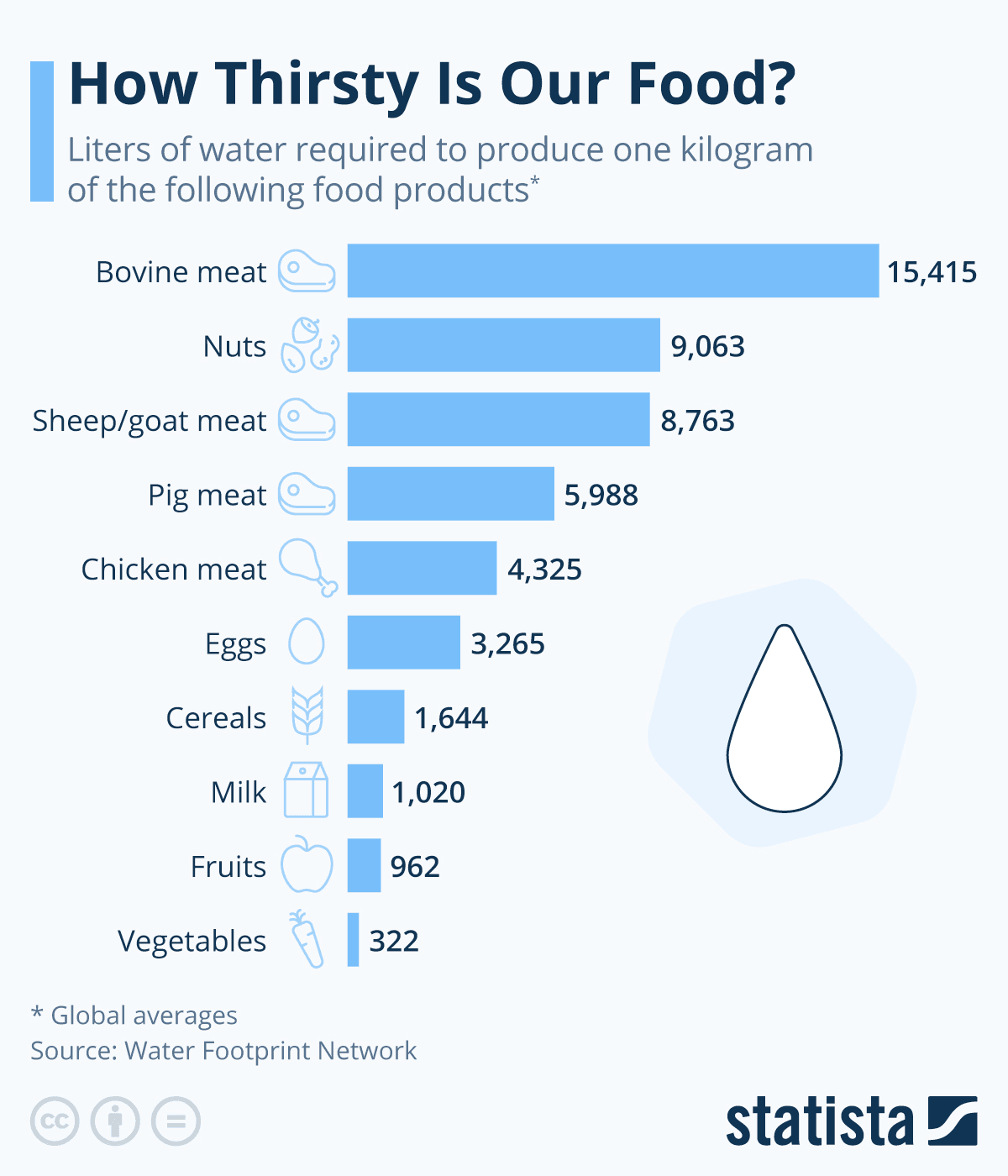
Statista. (2023). How thirsty is our food? [Infographic]. Retrieved from https://www.statista.com/chart/9483/how-thirsty-is-our-food/
Wasting Less Food
On a recent morning while shopping at the supermarket for some groceries, I saw the store clerk going through some of the strawberries. They were checking for any slight imperfections that had developed since the strawberries were put outside. Most of the strawberries were fine. Any slight imperfection found would be taken out of circulation and thrown away---this is a waste of energy to produce strawberries, and for the packaging and distribution of them. There are companies that do sell foods but often by the time it lands in the store and the imperfections develop, after not being sold for a few days, the packaging will be thrown out, long before it can be redistributed.
Food waste has become one of the primary drivers of climate change. It's a mind boggling problem to wrap one's head around. One third of all the food produced on Earth never actually gets to a dining table. Food is often spoiled in transit or tossed away by consumers who often forget having bought it. Aside from the energy used to produce the food, when you take into account the additional resources used to package the food and transport the waste is staggering. There is about 1.3 billion tons of food or nearly 1 trillion dollars globally wasted as of 2015. Most food waste comes directly from what consumers have already purchased and stored in their homes.
The environmental impact of food waste has a global toll. Food waste is the main cause of climate change and a great deal of environmental degradation. Food has to be grown. It has to be prepared. It then has to be shipped. All of this has a significant impact on the planet. The true minimalist consume everything they need without excess. Nothing is wasted. When food is purchased, it is used
There are various studies and estimates that suggest a significant portion of fruits and vegetables purchased by households end up being wasted. According to an NRDC report, American households throw away approximately 25% of food and beverages purchased.
Natural Resources Defense Council. Wasted: How America Is Losing Up to 40 Percent of Its Food from Farm to Fork to Landfill. 2017, https://www.nrdc.org/sites/default/files/wasted-2017-report.pdf.
Foods landed in landfills produce a variety of greenhouse gases driving climate change. Wasted food took up more space in American landfills than all forms of discarded waste. The rough cost of discarded produce for a single American family of four is about 1,600 dollars as of 2016. Another big issue with food waste is the wasted energy utilized to cultivate the food. The main way to reduce food waste is through minimalistic food consumption choices.
Buying food that looks imperfect but tastes great is an important strategy to minimize food waste and promote sustainability. Globally, around 1.3 billion tons of food are wasted each year, with a significant portion discarded due to cosmetic imperfections, even though it is perfectly safe and nutritious to eat. In the U.S. alone, it's estimated that about 20% of produce never leaves the farm because it doesn't meet the strict aesthetic standards of retailers. This cosmetic bias contributes significantly to global food waste, wasting not just the food itself but also the resources---like the 25% of global freshwater and vast amounts of energy and labor---used to grow, harvest, and transport it. By choosing to purchase imperfect produce, consumers can help shift demand away from unrealistic beauty standards for food and support a more sustainable food system where quality and taste matter more than appearance.
In recent years, a growing number of apps and local companies have emerged to address this issue by redistributing unsold or imperfect foods to communities. For example, companies like Imperfect Foods and Too Good To Go have helped divert millions of pounds of food from landfills by connecting consumers with surplus or "ugly" products at discounted prices. These initiatives not only help reduce food waste but also make fresh, healthy produce more accessible and affordable. By supporting these platforms and embracing the value of imperfect foods, individuals play an active role in combating food waste, reducing greenhouse gas emissions---since food waste accounts for about 8-10% of global greenhouse gas emissions---and fostering a more resilient, sustainable food supply chain.
Unnecessary Upsizing
Large portion sizes sold on store shelves often leads to buying more than we truly need. Inconsistent policies surrounding expiration date labels could cause us to throw away food that's still safe to eat. A national policy on date-labeling could be one of the cheapest ways to save more food. Why buy a bigger size of something than you need? A lot of things have to be finished within several days of opening it. Items such as fresh juice and beverages, jam and fruit extracts, packaged meats, produce, and so on.
Everything natural with limited amounts of preservatives, once opened and exposed to oxygen, has a limited amount of time before spoiling begins. The moment a package is opened, the natural process of oxidation begins, initiating a gradual decline in freshness and quality. Oxygen creates an environment for microorganisms like bacteria and mold to thrive, accelerating spoilage. This is why fresh produce, dairy, and other perishable goods are so sensitive to their storage conditions. Even oils and nuts, though less obviously perishable, are prone to rancidity as oxidation breaks down their molecular structure over time. Without artificial preservatives to slow this process, natural items are inherently time-sensitive, highlighting the importance of mindful consumption, proper storage, and minimizing waste by using them before they spoil. This cycle serves as a reminder of nature's balance and the impermanence of unprocessed, organic goods.
Using smaller bowls will help you eat less. It also helps reduce the amount of water and time spent washing dishes. Uses up less space in the dishwasher too. It also helps you waste less food as there is less space for it to spread around and stick to all the edges of the bowl.
Try to pick individual fruits and vegetables at the market unwrapped. This will prevent buying more than you need of a given produce. This will also help reduce the amount of plastic waste you are exposed to. Beyond the plastic that can stick to the produce itself, ever see those little pieces of plastic debris fall all over the counter when you cut the plastic wrap around produce? Its easy for some of those tiny pieces of plastic to end up in our food when we use the counter while preparing and plating meals. It will also help to reduce the amount of plastic trash you dispose into our environment.
Do not open the same type of food without finishing what you have already opened. When shopping for groceries, its important to not buy something you haven't nearly or already finished. If you have a box of crackers that's half full buying more crackers and then opening those before finishing what you already had will surely lead to increased food waste.
Food that is purchased but not consumed before it spoils is wasteful. We already know that waste is at the opposite end of the spectrum compared to minimalism. Ways to prevent buying food that will end up wasted:
- Will anyone in the house be going away in the near future? Should we adjust how much we buy accordingly?
- How many people in the house actually like this?
- How long will this last and will we be able to finish it by then?
- Once we open this how long will it actually last relative to the expiration date?
Sharpie Signings
Make sure there is a permanent marker in your kitchen close to the refrigerator where you can write the dates that things are opened. It only has between 2 to 7 days that it has to be consumed. Long expiration dates don't matter once something is open. There's only usually a week to use it. Often food expiration dates are no longer relevant after a product has been opened allowing in oxygen. Therefore it's important to write down the opening date on newly opened food packages to avoid wasted sustenance and to save money.
Under-Order
I always find it so disturbing when I'm sitting in a restaurant and the table next to me leaves so much food behind after departing. People often over-order food when dining out, leading to a shocking amount of food waste. It's even worse when people over-order food for delivery. Getting a bunch of food delivered, then having the contents sit in a box within the refrigerator wasting away before they are discarded. Most often food we get to go is left uneaten then thrown away a week later. You've not only wasted money and food, but you've wasted energy and packaging as well.
Over-ordering food generates significant package waste and wastes energy and money due to the excess materials and resources involved. Each food item ordered typically comes with packaging such as plastic containers, paper bags, or utensils, which are often single-use and end up in landfills. Packaging takes an incredible amount of energy to produce; the food we consume takes an even greater amount of energy.
Over-ordering amplifies this problem, increasing the volume of waste generated unnecessarily. Additionally, producing, transporting, and disposing of this packaging consumes energy, further contributing to environmental degradation through increased greenhouse gas emissions.
Refrigeration requires electricity to keep food at safe temperatures, and storing surplus food increases the demand for energy use. Over time, this contributes to higher energy bills and greater greenhouse gas emissions associated with electricity production, particularly in regions reliant on fossil fuels for power.
The energy invested in the entire lifecycle of the food---growing, harvesting, processing, packaging, and transporting---goes to waste if the food is ultimately discarded. This energy loss compounds the environmental impact, as the production of food is a resource-intensive process involving water, land, fuel, and labor. By over-ordering and not consuming what is stored, both financial resources and environmental sustainability are unnecessarily strained. Mindful purchasing and portioning can help mitigate these issues.
From a financial standpoint, over-ordering means paying for food that may not be consumed, leading to wasted money. Energy used in cooking and delivering surplus food---whether through personal preparation or food services---also goes unused when the food is discarded. These combined effects highlight the importance of mindful ordering to reduce waste, conserve resources, and save money.
The Source
A useful way to help reduce food waste is to reflect on what went in to making the food that we consume. Meditating on how food was sourced is a useful way to minimize food waste. Trying to think about how the food was grown. The people that were involved in bringing the food to you. Reflect on all the effort that goes into making the food we depend upon in our lives. Part of the step into the production of it. Try to think about the insects, the bees, the planning of the crop the harvesting of it if it's a piece of meat, everything that went in to growing and taking care of that animal before it was slaughtered so that we could consume it for sustenance if it's a plant everything that went into growing that plant and that sugar or honey everything that went into producing that bit of sugar that bit of honey. For fruits and vegetables for all types of plants, everything that goes in the pollination harvesting timing, packaging of the crop and bring it to us so that we are able to consume the nutrition of that that piece of life.
We have to strive to be on top of food waste because there's so much that goes into creating food for us. Wasting it is overlooking the depth of energy and effort that goes into producing some thing the moment you start to overlook the effort that goes in to producing consumable items not just food, but everything that we consume is the moment that we become wasteful and that is one of the reasons that climate change gets worse, do not overlook the cycle of life and energy transfer that goes in to creating food and sustenance for our survival.
If food ends up being wasted dig into why it occurred. It's a little like an investigation with some introspection but it will help prevent it from reoccurring in the future. Minimalism helps prevent the main cause of food waste, the overproduction of food.
Reducing Plastic in Food
Reducing the amount of plastic we ingest from our food is a critical step toward protecting our health. As plastic production and consumption increase, more of it ends up breaking down into micro- and nanoplastics (MNPs), which enter our food and water systems. These particles accumulate in our bodies and the environment, acting as endocrine disruptors and contributing to a range of health issues. Slowing this feedback loop---where more plastic leads to more environmental contamination, which leads to more ingestion---is essential not just for individual well-being but for the health of all living systems.
One overlooked source of plastic ingestion comes from how we obtain our meals. Takeout and food delivery often rely heavily on plastic packaging---containers, lids, utensils, cups, straws, and sealed wrappings. These materials can leach chemicals into hot foods and drinks, especially when stored or reheated in plastic. Even when disposed of, these plastics break down and re-enter ecosystems, eventually working their way back into the food chain. Dining in, when possible, helps minimize this exposure. Choosing reusable dishware and avoiding plastic-heavy convenience meals reduces your direct plastic intake and helps cut down on overall plastic waste.
We need to think critically about how our food reaches us and what it's wrapped in. Simply opting for dine-in meals or bringing your own container can dramatically lower the amount of plastic you and your family consume. It's a small shift in habit that adds up to significant long-term benefits---for your body, your community, and the planet.
Split It
Get into the habit of sharing food at restaurants. Split a meal with a friend or on a date. This will help reduce the costs of eating out. Indirectly it also reduces the amount of food packaging waste created as a result of over-ordering food.
Often restaurants serve portion sizes far exceeding what the average person can finish in each meal.
If a restaurant still uses plastic even when you are dining in, talk to them about it. Voice your concerns and ask them to prepare food when dining in without plastic. Even disposable coffee cups are lined with plastic that leeches microplastics into hot beverages. Asking the businesses you frequent to use less disposable
Eating at Home
Lately it seems that dining in is increasingly healthier than eating out. There is less plastic consumed and the food is fresher and more likely to be organic.
Home-cooked meals often contain higher amounts of fruits, vegetables, and whole grains compared to restaurant meals, which may be lower in these nutrient-rich foods. Consuming a variety of fruits and vegetables provides essential vitamins, minerals, and dietary fiber that are important for overall health and well-being
Where and what you eat as part of your diet is considered a major route of PFAS exposure. By eating more often at home, you can reduce your exposure to PFAs. In your home, you and your family control the type of cookware you use. "Calories of food eaten at home in the past 24 h had significant inverse associations with serum levels of all five PFASs." Susmann HP, Schaider LA, Rodgers KM, Rudel RA. Dietary Habits Related to Food Packaging and Population Exposure to PFASs. Environ Health Perspect. 2020 Jan;128(1):017003. doi: 10.1289/EHP4092. Available from: https://ehp.niehs.nih.gov/doi/full/10.1289/EHP4092.
Eating at home results in lower Phthalates exposure as well. One way to limit the consumption of phthalates is to use less plastic wrap and storage products. When you can use reusable glass food storage containers. Avoid ceran wrap by placing a plate or another flat type of cover over left over food. Try to shop to a super market that allows you to refill your containers with some of the most common food staples without buying more wrapped in plastic.
One of the most significant issues with over traveling is the overexposure to restaurant food of lower nutritional value with more contaminant risk.
Without access to a kitchen, travelers depend on pre-made meals or dining out, which reduces control over ingredients, portion sizes, and cooking methods. Foods prepared outside the home often include added sugars, salts, and preservatives that are difficult to monitor.
Delivery and Plastic Feedback Loops
Avoid food delivery and pickup or takeout when possible. The inconvenient truth about food delivery is, its wasteful and expensive. Not only does the food not taste as good after its been packaged and delivered but its probably soaked in microplastics from the container it was packed in. As for picking food up, try to steer clear of that as well. Getting food prepared to go either by calling the order in or ordering it at the restaurant then leaving isn't ideal. This is because it our choices and feedback is limited. Unless the restaurant allows you to bring in your own reusable food containers and packaging, you end up with food packed in plastic bags and containers. You lose packaging choices. Nor will you be able to provide feedback on food quality.
Think about how a large proportion of food is packed in plastic when purchased at the supermarket. Its no different for restaurants. So when we get food delivery or pick up food to go, we end up increasing the amount of plastic packaging we consume. Plastic to ship food through the supply chain then plastic used to repack cooked/prepared foods leads to further plastic ingestion. Which leads to extra plastic consumption down the road as more of the waste breaks down in our environment. Single use packaging in particular is a major contributor to the plastic health crisis. Our trash leads to more plastic ingestion which leads to worsening health outcomes.
Transportation emissions from food increase with delivery. Contributes towards food waste as food can spoil during transportation
Minimalists need to pay particular attention to how feedback loops impact our overall health. These feedback loops impact us in many ways. It could be a type of feedback that will impact our financial wellbeing, and eventually our mental health. It can also be a type of feedback that can harm our health by harming components of the environment we depend on as part of our minimal sustenance.
We need to break away from the mindset that the food and drinks we consume are separated from the material used to package it. Plastic enters our food when its stored. It enters it when we heat it up. Pieces of plastic can stick to food just by touching it.
Plastic food packaging contains chemicals that disrupt the endocrine system --- and that can leach into food, a new study has found. Once there, these chemicals can mimic --- or disrupt --- the effects of the hormones estrogen and testosterone on the body.
Other chemicals discovered in the plastic packaging bind to chemical receptors that control how cells use energy, possibly leading to metabolic disorders.
LDPE is a common polymer used in Ziploc-style bags, among other things, and PVC is the main component in cling wrap. Polyurethane is a common element in food packaging --- wrapped around cheeses for example --- and some water bladders for hiking packs.
They found less response in cell nuclei exposed to chemicals such as high-density polypropylene (HDPE), polyethylene (PET) and polypropylene (PP). These are chemicals found in milk bottles, to-go cups and yogurt containers.
People who eat takeout often, like fast food and pizza, often have higher levels of per- and polyfluoroalkyl substances (PFAs). Research has found levels of perfluorinated chemicals is lower in people who regularly cook at home, according to a 2019 study. They are known for their persistence in the environment and in the human body, thus being called "forever chemicals."
Per- and polyfluoroalkyl substances (PFAS) are synthetic chemicals causing an assortment of health issues. These include an increased risk of cancers, particularly kidney and testicular cancer, and hormonal disruptions that can lead to thyroid disease and affect reproductive hormones. PFAS can also weaken the immune system, reducing vaccine effectiveness and increasing susceptibility to infections. Additionally, PFAS exposure has been associated with liver damage, indicated by changes in liver enzymes, and developmental issues in fetuses when pregnant women are exposed, such as low birth weight and developmental delays. Elevated levels of PFAS in the blood correlate with increased cholesterol levels, contributing to cardiovascular problems, and there is evidence suggesting a link to kidney disease and affected kidney function. Some studies also indicate that PFAS exposure may lead to weight gain and obesity, decreased fertility in both men and women, and respiratory issues like asthma. These health concerns underscore the importance of regulatory measures to limit PFAS exposure and mitigate their public health impact.
Reheating
Microplastics can seep into food when its reheated. Research has shown that microwaving plastic packaging can seep large amounts of microplastics into our food. What about packaging hot food just finished being prepared into plastic containers? Wouldn't that seep some plastics into the food as well. It turns out it does. "We determined the average weight of isolated MP per pack to be 12 ± 5.12 mg, 38 ± 5.29 mg, and 3 ± 1.13 mg for the round-shaped, rectangular-shaped plastic container and disposable plastic cups." Fadare, Oluniyi O., Wan, Bin, Guo, Liang-Hong, & Zhao, Lixia. (2020). Microplastics from consumer plastic food containers: Are we consuming it? Chemosphere, 253, 126787. ISSN 0045-6535. DOI: 10.1016/j.chemosphere.2020.126787. Retrieved from https://doi.org/10.1016/j.chemosphere.2020.126787
Another study had similar findings regarding microplastics(MPs) exposure. "MPs release from PS container was the highest at base conditions, because polystyrene(PS) fragmentation into MPs size was proceeded by oxidation/hydrolysis and induced by temperature and exposed time. The existence of simultaneously exposed pollutants(SEPs) at MPs release test implies that humans are being exposed to the unwanted and unknown amounts of pollutants that may potentially threaten human health." Wang, J., Lee, J., Kwon, E. E., & Jeong, S. (2023). Quantitative analysis of polystyrene microplastic and styrene monomer released from plastic food containers. Heliyon, 9(5), e15787. ISSN 2405-8440. DOI: 10.1016/j.heliyon.2023.e15787. Retrieved from https://doi.org/10.1016/j.heliyon.2023.e15787
Plasticizers
We are increasingly susceptible to the ingestion of bisphenols and phthalates through our foods. Plasticizers---of which the most common are called phthalates---can be found is nearly all of us, along with other chemicals found in plastic, like bisphenols such as BPA. Keep in mind that many products might have labeling indicating it's BPA free. This can be misleading though, as they are probably using a BPA alternative that has similar ill health effects that that researchers haven't yet fully uncovered.
Plasticizers in particular can easily leach out of plastic and other materials. Exposure to these chemicals is even worse as a result of consuming food prepared outside of our homes. Not only is the packaging from ordering delivered food bad for the environment but the food itself is harmful to our health. Phthalates and bisphelols are endocrine disrupting chemicals (EDCs). These chemicals are associated with hormone-mediated health outcomes. Their existence in our bodies can cause an assortment of problems like, reproductive issues, metabolic disease, and neurodevelopmental difficulties.
"Consumption of food prepared away from home, rather than food purchased in a store and prepared at home, has grown steadily over the last few decades in the United States. Between 1970 and 2014, household food expenditures devoted to dining out increased from 25.9% to 43.7%, respectively, and over half of total U.S. food dollars are currently spent on foods purchased outside the home "
"Dining out may be an important source of biologically relevant cumulative phthalates exposure among the U.S. population. Future studies should evaluate modifiable production practices that remove phthalates from the food supply in addition to the efficacy of interventions that promote eating fresh foods prepared at home." Varshavsky, J. R., Morello-Frosch, R., Woodruff, T. J., & Zota, A. R. (2018). Dietary sources of cumulative phthalates exposure among the U.S. general population in NHANES 2005--2014. Environment International, 115, 417-429. https://doi.org/10.1016/j.envint.2018.02.029
Phthalates and bisphenols can disrupt, the production and regulation of estrogen and other hormones, potentially boosting the risk of birth defects, cancer, diabetes, infertility, neurodevelopmental disorders, obesity and other health problems. "The most concerns include phthalates, bisphenol A (BPA), and polychlorinated biphenyls (PCB). These substances have been identified as endocrine-disrupting chemicals (EDCs) which interfere with normal hormonal actions". Wang Y, Qian H. Phthalates and Their Impacts on Human Health. Healthcare (Basel). 2021 May 18;9(5):603. doi: 10.3390/healthcare9050603. PMID: 34069956; PMCID: PMC8157593.
Healthy Water
Having clean refreshing water is a quintessential part of a healthy lifestyle. To be in robust physical condition as a minimalist we need to have an ample supply of invigorating drinking water. Balanced water supplies have become surprisingly elusive in our modern lives.
The problem with many types of water filtration is you end up losing everything in the water that you need. The beneficial minerals are often removed as part of of the filtering process. These include magnesium and calcium, as well as iron and manganese, which are eliminated to make water softer and prevent discoloration, respectively.
After you've finished filtering your water it's useful to figure out how to add minerals back into it. The problem is these mineral additives are often stored in a plastic container which can seep microplastics into the bottle. It introduces new problems after filtration completes. One of the problems with unfiltered water is you get the trace amount of minerals you need but then you could end up ingesting harmful elements like PFAs or other carcinogenic contaminants.
It's important to recognize that water filters can be a breeding ground for harmful bacteria. Sponge-like activated carbon filters in particular can serve as potential breeding grounds for dangerous bacteria. As part of a healthy lifestyle, you will have to take filter maintenance into consideration. At the minimum, if you don't maintain your water filter properly, you won't benefit from using it. Actually, without proper filter preservation techniques, we might instead end up drinking worse water.
Given the problems with filtered water and problems with drinking unfiltered tap water directly what's a minimalist to do?
The trick is to understand what's in your water and whether it needs to be treated, then find the appropriate filter to do so. This is where testing your drinking water comes into play. Understanding the composition of your local water supply is also critical in choosing the right approach. Testing your water helps identify specific contaminants and determine whether a simple carbon filter suffices or if advanced systems like reverse osmosis are necessary. Monitoring the total dissolved solids (TDS) in your water can also help maintain a balance; water with very low TDS may lack essential minerals, while excessively high TDS may indicate impurities.
For those in areas with clean natural water sources, consuming untreated water may occasionally provide a healthy mix of minerals, provided the source is tested and verified as safe.
Determining the proper filtration techniques needed to provide the most fulfilling water based on the area you live in can be time consuming. But investing in healthy water filtration as well as strategies to retain or restore beneficial minerals is vital to a wholesome minimal lifestyle.
Comments
Loading comments…